
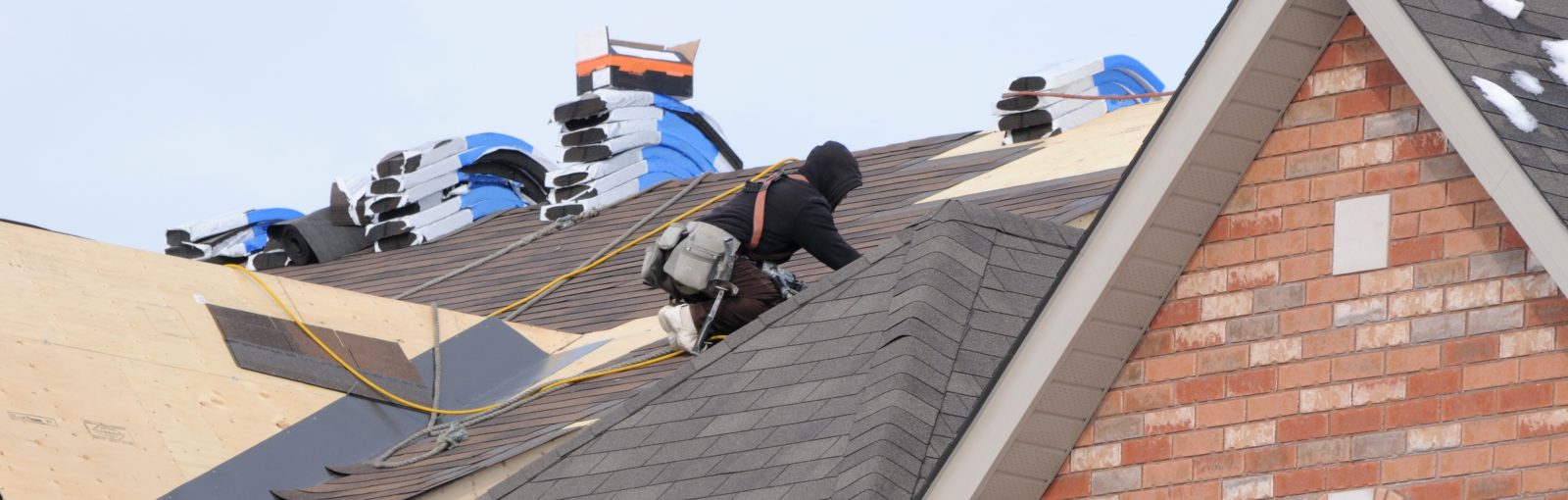
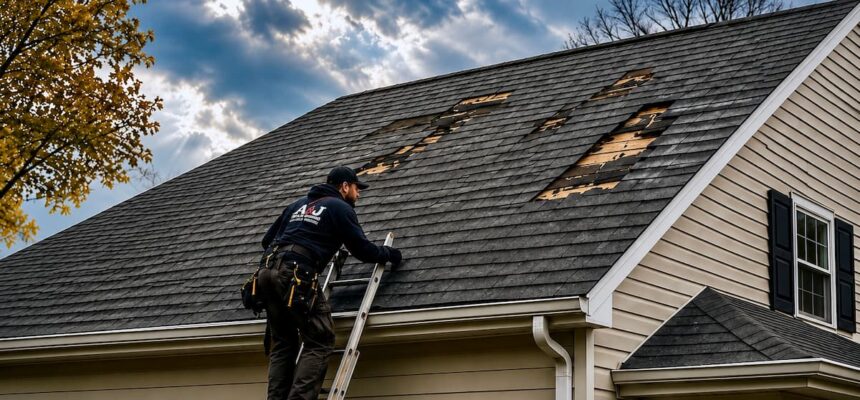
7 Signs You Need Roof Repair Before the Next Bergen County Storm
Nor’easters do not give much warning. By the time the National Weather Service posts a wind advisory for Bergen County, every roofer in the county is already booked solid, phones ringing off the hook, crews stretched thin. We have lived through enough of these storms to know the pattern by heart. The homeowners who come through the calmest are the ones who fixed the small thing back in October, not the ones scrambling in the dark while a ceiling stain spreads overhead.
Here is a number that stops most people: wind and hail cause roughly 42 percent of all homeowners insurance losses nationwide, with an average claim near $13,511, according to the Insurance Information Institute. What that statistic does not tell you is that almost every one of those claims starts at a weak point that was already sitting there, quietly, for months before the wind ever found it. A curled shingle. A cracked pipe boot. A little rust below a chimney that nobody thought twice about.
We have been up on Bergen County roofs since 1979, and these are the seven weak points we find most often, what each one honestly costs to fix now, and what it costs once you wait it out.
1. Missing, Lifted, or Curled Shingles
You will usually spot this one from the ground. A bare patch after a windy night, a shingle tab standing up instead of lying flat against its neighbors, or corners curling upward across a whole slope. These look similar, but they are not the same problem. A lifted shingle has lost its seal, and once that adhesive strip is contaminated with dirt, it will not reseal itself. It becomes a hinge, and the next 50 mph gust pulls it, and often takes a few neighbors with it.
Curling is different. Curling is age. When shingles curl at the edges across an entire slope, the mat has simply dried out, and that roof is nearing the end of its service life, not in need of a patch.

- Repair now: replacing a handful of missing or broken shingles typically runs $300 to $800.
- Cost of waiting: once water works past the underlayment into the decking, you are looking at $4 to $8 per square foot for sheathing replacement. A rotted 10 by 10 section adds roughly $800 to $1,500 on top of everything else.
2. Granules Piling Up in the Gutters
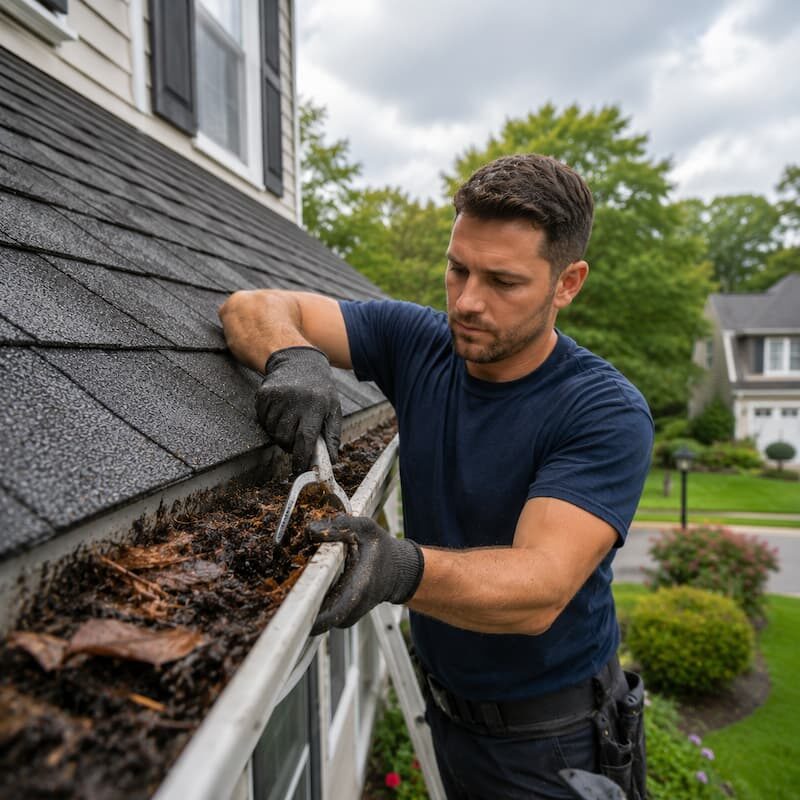
This is a quiet one, and it is easy to miss unless you are already looking. A coarse, sand-like grit collects at your downspout outlets, or dark bare patches on the shingle surface where the granule layer has worn thin. Those granules are the shingle’s sunscreen. Once they are gone, the asphalt underneath oxidizes, hardens, and cracks in the sun.
Some granule loss is completely normal on a newer roof. Steady, ongoing loss on a roof past year 15 usually is not, and it is worth a look. We check the roof surface every time we are up cleaning a customer’s gutters for exactly this reason.
- Repair now: if a gutter overflow or a misdirected downspout is the actual cause, correcting the drainage runs a few hundred dollars.
- Cost of waiting: if the cause is simply age, granule loss across a slope generally is not repairable, and you are looking at replacement.
3. Failed Flashing at Chimneys, Sidewalls, and Valleys
Rust streaks below a chimney, cracked or crumbling mortar at the counterflashing, roofing tar smeared over a seam by someone in years past, or a ceiling stain that shows up only when rain comes from one particular direction. All of it usually traces back to flashing, not the shingle field itself.
Bergen County’s housing stock skews older than most of New Jersey’s. State health department data puts nearly three-quarters of the county’s homes at pre-1980 construction. Older homes mean more masonry chimneys, more dormers, and more places where one roof plane meets another, and every one of those intersections is a flashing detail. That tar we mentioned is always a tell. Roofing cement smeared over a joint is a temporary fix someone made permanent, and it shrinks, cracks, and fails again within a few seasons.

- Repair now: flashing replacement typically runs $150 to $1,000 depending on the detail, with chimney flashing and full valley work at the top of that range.
- Cost of waiting: flashing leaks are slow, and they run inside your walls. By the time drywall stains, you are often looking at insulation replacement, and sometimes framing.
4. Ice Dam Damage at the Eaves

Icicles the size of your forearm hanging off the gutters in January, a water stain on the ceiling along an exterior wall, peeling paint near the top of an interior wall, or a gutter that has been pulled clean away from the fascia. All of it points to the same culprit.
Northern and western Bergen County towns sit in New Jersey’s northern climate zone, which the Office of the New Jersey State Climatologist at Rutgers reports averages 40 to 50 inches of snow a year, with roughly 200 days annually where a freeze is possible in the higher elevations. That is ideal ice dam territory: enough snow to sit on the roof, and enough freeze-thaw cycling to melt it at the ridge and refreeze it at the cold eave.
Here is the thing homeowners are often surprised to learn: ice dams are rarely a shingle problem. They are a heat-loss and ventilation problem. Warm attic air melts snow higher up on the roof; that meltwater runs down to the unheated overhang, freezes, and slowly builds a dam that backs water up underneath the shingles. If your home drops ice dams every winter, the real fix is upstream of the roof surface entirely: air sealing, insulation depth, and balanced intake-to-exhaust ventilation.
- Repair now: addressing the water damage, adding proper ice barrier protection, and improving ventilation typically runs $500 to $2,000 in combined prevention and repair costs.
- Immediate relief: roof snow removal before a dam has the chance to form is far cheaper than repairing what a dam does once it has set in. We handle this for Bergen County homeowners every winter.
5. Cracked or Missing Pipe Boots
This one might be the most common leak we find on any roof, in any town, in any given year, and it is also, thankfully, the cheapest to fix. The rubber collar around a plumbing vent pipe wears out from UV exposure and freeze-thaw cycling, typically failing somewhere between years 8 and 12. Once it splits, water follows the pipe straight down into the ceiling below, and the resulting stain often appears several feet away from the actual leak, since water tends to travel along framing before it finally drips through.
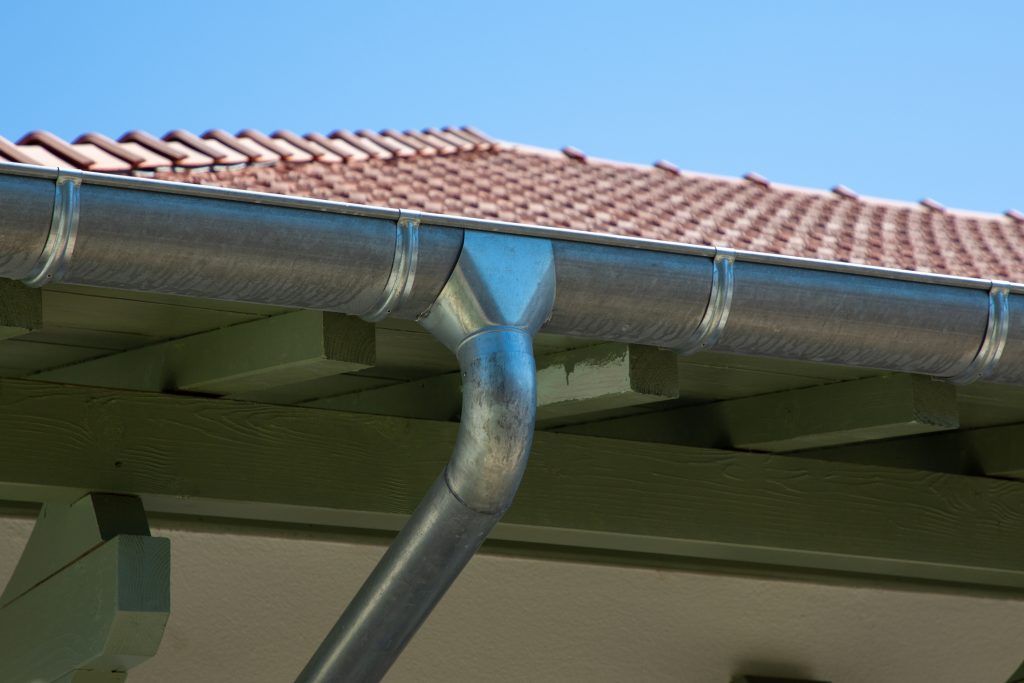
- Repair now: materials run just $15 to $50. Labor is most of the bill. Upgrading to a stainless or aluminum-collar boot adds $50 to $150 and typically lasts three to four times as long as the standard rubber version.
6. A Sagging Roofline or Soft Decking

A ridge line that visibly dips in the middle, a slope that looks wavy when you view it from across the street, or a spongy feeling underfoot if someone walks the roof. This one is structural, and it is the sign on this list that should move you off the fence and onto the phone with us the same day you notice it.
Sagging usually means the decking has absorbed water long enough to lose its stiffness, or the framing underneath has been compromised in some way. In Bergen County, we see this most often on homes carrying two full layers of shingles, on original 1x plank decking, or on roofs where an old slate system was replaced with asphalt without ever addressing the framing underneath it.
- Repair now: correcting a sagging roof section typically runs $750 to $3,000. If rafters or trusses are involved, structural repair requires a permit under New Jersey code, since framing work is not considered ordinary maintenance, and cost can exceed $3,000.
7. Dark Streaking and Moss Growth
Black or dark green vertical streaks running down a north-facing slope, or clumps of moss tucked into shaded sections and valleys. The streaking is Gloeocapsa magma, a blue-green alga that feeds on the limestone filler in asphalt shingles and thrives in humidity and shade. Bergen County provides plenty of both. Our mature street tree canopy is one of the best features of this county and one of the hardest things a roof has to deal with, since shaded slopes stay damp for hours after a rain that would dry an exposed slope in twenty minutes.
Algae staining is mostly cosmetic in its early stages. Moss is a different story. It holds moisture directly against the shingle, lifts the tab edges as it grows underneath, and accelerates granule loss. The Roofing Industry Alliance for Progress has estimated that a severe algae infestation can shave up to 10 years off a shingle’s expected lifespan.
Please, whatever you do, do not let anyone talk you into pressure washing it off. High-pressure water strips the granules right off the shingle and can void most manufacturer warranties on the spot. The correct treatment is a low-pressure soft wash with an appropriate cleaning solution, which is exactly why our roof washing service exists. Trimming branches back from the roof plane addresses the root cause too, and it reduces debris load in your gutters as a bonus.
We wrote quite a bit more about this in Why Bergen County Roofs Get Black Streaks, and How Soft Washing Removes Them for Good, if you would like to understand the science behind it.
When Repair Stops Making Sense
Repair is the right answer when a problem is localized, identifiable, and the surrounding roof still has real service life left in it. Replacement becomes the better decision once repair costs start approaching roughly 30 percent of what a full replacement would run. In Bergen County, where a complete replacement typically runs $12,000 to $18,000, that threshold lands somewhere around $3,600 to $5,400. It is also the smarter move once a roof passes year 20 on architectural shingles or year 15 on 3-tab, once you have leaks showing up in more than one plane of the roof, once granule loss has gone broad instead of staying localized, or once there are already two layers of shingles up there, which limits what any repair can realistically accomplish.
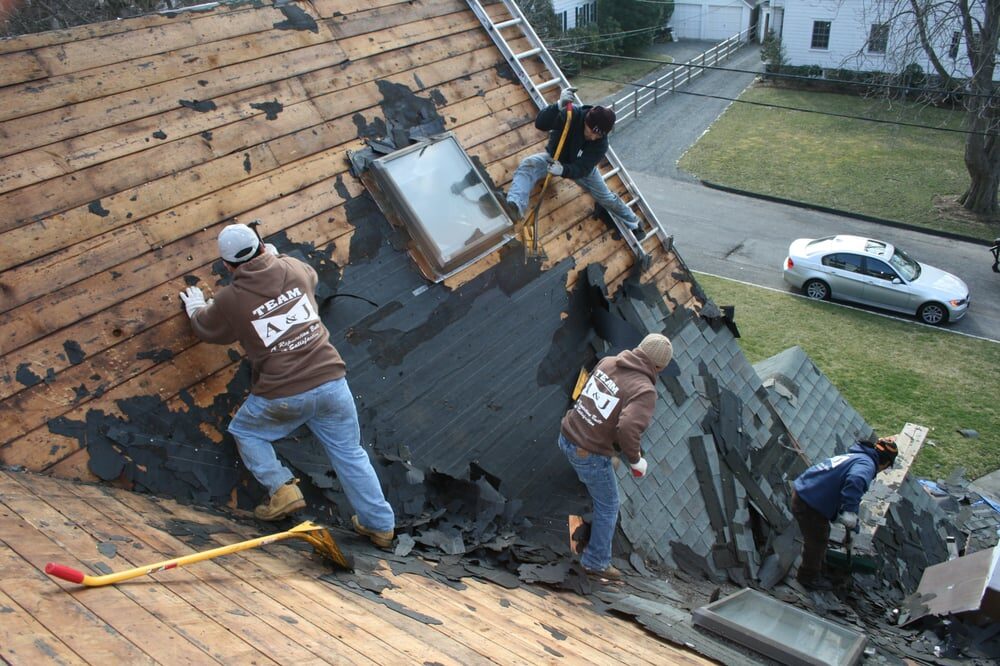
A contractor who inspects a 24-year-old roof with three separate leaks and quotes you a patch is not doing you any favors. Neither inspects a 9-year-old roof with a single split pipe boot and quotes a full replacement. We would rather lose the bigger sale and keep your trust.
Before the Next Storm: A Homeowner's Checklist
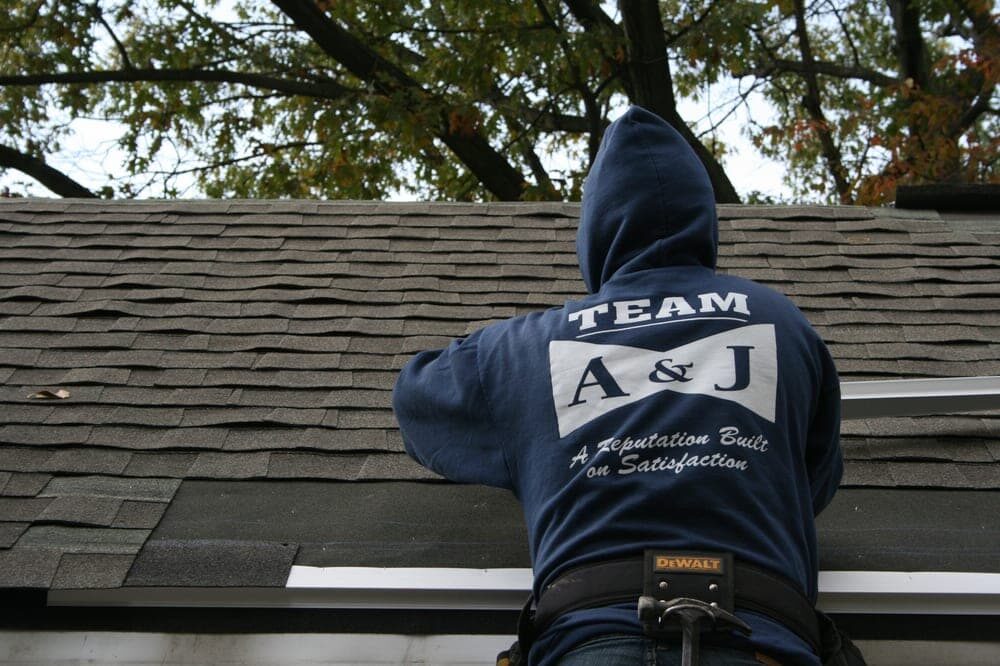
- Walk the perimeter after every significant wind event, looking for shingle pieces in the yard, granule buildup at the downspouts, and anything visibly out of line.
- Clean the gutters twice a year, fall and spring. Clogged gutters back water up under the first course of shingles and contribute directly to ice dams. Our gutter cleaning service covers Bergen County, and gutter guards are worth considering if tree cover makes it a constant chore.
- Check the attic itself, not just the ceiling below it, for daylight at penetrations, dark staining on the underside of the decking, and damp or compressed insulation.
- Photograph your roof from the ground once a year, dated. Those photos are useful evidence if you ever need to file an insurance claim.
- Get a professional inspection every two years, and yearly once your roof passes year 15.

Frequently Asked Questions
How much does roof repair cost in Bergen County, NJ?
Most roof repairs in northern New Jersey run $300 to $2,000, with the average closer to $650 to $1,400. Simple fixes such as a pipe boot replacement sit at the low end. Structural repairs, decking replacement, and complex flashing work run higher.
Do I need emergency roof repair, or can it wait?
Active water entering the living space, a visibly sagging roofline, or exposed decking after a wind event should all be treated as urgent. A single stain on a ceiling that only appears during heavy wind-driven rain can usually wait for a scheduled appointment.
Should I call my insurance company first?
Get an assessment first. Once you understand the scope and cost, you can decide whether the claim exceeds your deductible by enough to be worth filing. Small repairs that fall near the deductible are often better paid out of pocket. Many carriers now attach an actual cash value settlement endorsement to roofs over 10 to 15 years old, which significantly reduces what a claim pays.
Will a repair void my roof warranty?
Manufacturer material warranties generally survive a repair. Workmanship warranties from the original installer often do not survive work performed by another contractor, so check the terms before hiring anyone new.
Does homeowners insurance cover roof leaks?
It covers sudden, accidental damage from a covered peril such as wind, hail, or a falling tree limb. It does not cover deterioration, poor maintenance, or normal wear.
Get It Looked At Before the Next One
A&J Reliable has been repairing roofs across Bergen County since 1979. We will tell you honestly whether you need a repair or a replacement, and we will tell you the same thing whether or not it happens to be the more profitable answer for us. That has always mattered more to us than any single job, and it is a large part of why so many of our customers are the neighbors, children, and grandchildren of people we worked for years ago.
Schedule a free roof inspection or request an estimate for professional roof repair services in Bergen County, NJ from our team today.




