
How Much Does a New Roof Cost in Bergen County, NJ? (2026 Homeowner's Guide)
Roofing Material Cost Comparison
Bergen County, NJ – Cost Per Square (100 sq. ft.)
Roofing Material Cost Comparison
$100-$150
per square
(100 sq. ft.)
Most popular choice
$300-$700
per square
(100 sq. ft.)
40 – 70 year lifespan
Slate Roofing
$600-$1500
per square
(100 sq. ft.)
75 – 100+ year lifespan
Note: These costs are material-only costs.
Premium Roofing: Typical Total Project Cost
Bergen County, NJ — full installation, average-sized home
LUXURY SHINGLES
per square
(100 sq. ft.)
Total project cost
SLATE
$15,000-$45,000
per square
(100 sq. ft.)
Total project cost
$25,000-$50,000
per square
(100 sq. ft.)
Total project cost
How Much Does a New Roof Cost in Bergen County, NJ? (2026 Homeowner's Guide)

By A & J Reliable, Inc. — Family-owned in the tri-state area since 1979
There is a particular kind of phone call we get every year around this time, and it usually starts the same way. “We weren’t planning on this,” the homeowner says, a little apologetically, as if the roof did something wrong by getting old. It didn’t. Roofs in Bergen County work harder than almost anything else on your property, and after twenty or thirty years of freeze, thaw, wind, and sun, it is only fair that they eventually need to be replaced.
We have been climbing ladders in this part of New Jersey since 1979, and if there is one thing we have learned, it is that homeowners deserve a straight answer about what a new roof actually costs, not a sales pitch. So consider this our Sunday-morning, coffee-in-hand conversation with you: who needs a new roof and why, what it costs in Bergen County right now, where the money actually goes, and how our changing seasons quietly decide the timeline for you, whether you were ready or not.
Material Type
This is usually the biggest lever. Roofing is priced per square, which is the standard unit contractors use for both material and labor. One square equals 100 square feet of roof surface.
| Material | Material only, per square | Installed, per square | Typical lifespan |
|---|---|---|---|
| Asphalt shingle | $120 to $270 | $550 to $950 | 20 to 30 years |
| Metal | $300 to $700 | $900 to $2,000+ | 40 to 70 years |
| Slate | $600 to $1,500 | $1,500 to $3,000+ | 75 to 100+ years |
Installed figures reflect current Bergen County ranges and include tear-off, underlayment, flashing, and labor. Material-only figures are what the product costs before anyone puts it on your roof, which is why the two columns look so different.
Client: Confirm these ranges against your own 2026 job costing before publish. If your actual numbers differ, use yours. A homeowner who reads a range here and gets a materially different estimate from us loses trust in both.
Asphalt remains the most popular choice in Bergen County for good reason. It is affordable, it performs well in our climate when installed correctly, and it carries strong manufacturer warranties from brands like GAF and Owens Corning. Metal and slate cost more up front, but they last considerably longer, which we will get to in a moment.

Who This Guide Is For
Whether you are in a colonial in Ridgewood, a split-level in Paramus, a Tudor in Teaneck, or a newer build out toward Franklin Lakes or Mahwah, this guide is written for you. It applies just as much to a roof that is thirty years old and visibly tired as it does to a newer roof that took a beating from a single bad storm. Age and weather do not care what the house looks like. They treat every roof in the county the same way over time.
What Determines the Cost of a New Roof in Bergen County
There is no single number that fits every home, and honestly, we get a little suspicious of anyone who quotes you a price over the phone before ever setting foot on your roof. What we can tell you is which factors move the number up or down, and by how much.

Roof Size and Complexity
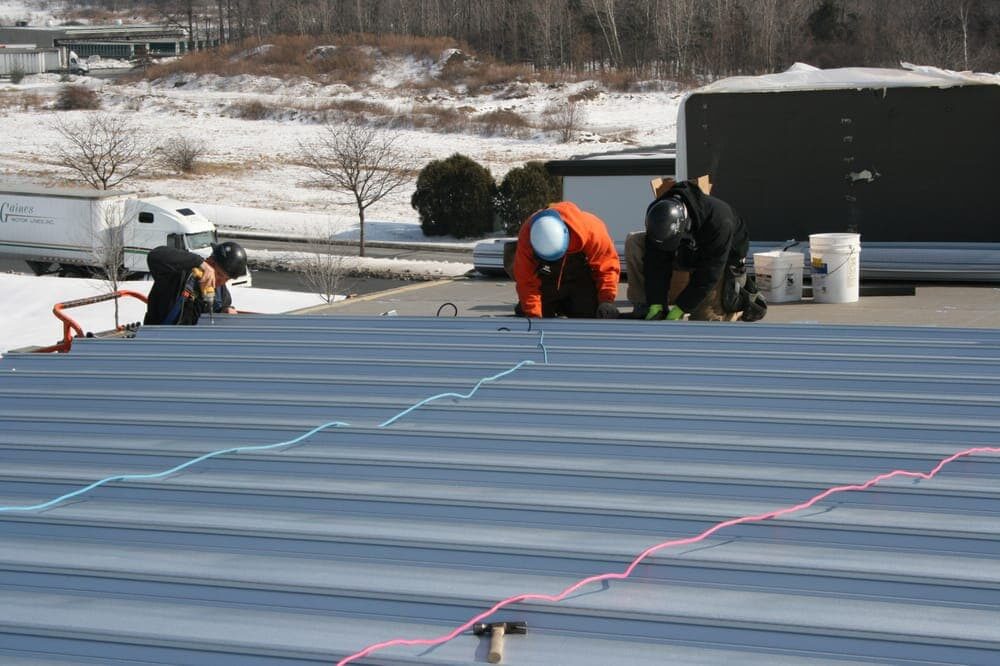
A simple rectangular ranch roof and a Victorian with dormers, valleys, and multiple pitches are not the same job, even if the square footage is identical. Every additional angle, valley, or level needs its own flashing and underlayment, and that adds both material and labor time.
Labor Cost
Skilled labor is not optional on a roof. It is the thing standing between you and a leak five years from now. In New Jersey, labor typically accounts for roughly 55 to 65 percent of the total cost of a roofing project, which is why two estimates for the same house can differ by thousands of dollars depending on who is actually doing the work and how carefully.

Permits and Disposal
Here is some good news worth knowing. Since 2018, New Jersey’s Department of Community Affairs has classified replacement of existing roof covering on detached one- and two-family homes as ordinary maintenance, which means most Bergen County homeowners do not need a construction permit to replace a roof.
Two things to watch. The exemption applies to detached homes, so attached and semi-detached properties, townhouses, and multi-family buildings may still require a permit. And the exemption covers the roof covering only. If the job involves replacing sheathing, rafters, or any structural member, a permit is required. Always confirm with your local construction office before work begins.
What you will pay for, regardless of permits, is disposal of the old roof.
Client: Insert your actual disposal cost range. The prior draft said $1,000 to $2,000 with no source. Use your own numbers here, or cut the figure and say it varies by the number of layers coming off.
Structural Repairs
Sometimes, once the old shingles come up, we find something underneath that nobody could have seen from the ground, like a soft spot in the decking or a rafter that has seen one too many wet winters. Decking replacement generally runs $2,000 to $5,000. If rafters need rebuilding, that is a larger job and can run $3,000 to $7,000 on top of the decking work. We always show you what we found before we touch it, because it is your home and your decision.
Client: The prior draft gave two different structural repair ranges in two different sections. This version separates decking from rafters so the numbers no longer contradict each other. Confirm both ranges.
What Is the Most Expensive Part of a New Roof?
Homeowners are often surprised to learn that labor, not materials, is usually the single largest line item on a roofing invoice. Proper installation takes time, and time is where skilled craftsmanship earns its keep. That said, a few specific factors can meaningfully raise your total cost.

Specialized Labor
Steep slopes, multiple angles, and premium materials like slate or copper require a level of craftsmanship that not every crew can offer. Labor on these projects costs meaningfully more than a standard asphalt installation, because the work is slower, the safety requirements are greater, and the pool of qualified installers is smaller.
Structural Repairs
Decking and rafter work, described above, is the most common source of a cost increase after the job starts. These are not upsells. They are the difference between a roof that lasts and one that fails early.
How Our Changing Seasons Quietly Wear Down Your Roof
If you have lived in Bergen County for any length of time, you already know our weather does not do anything halfway. We get real winters, humid summers, and everything in between, and every one of those seasons leaves its mark on a roof, whether you notice it or not.
Winter is, without question, the toughest season for a Bergen County roof. Our region goes through dozens of freeze-thaw cycles every winter, and every single one matters. Here is why. Water finds its way into even a hairline crack, then freezes and expands by roughly nine percent. That tiny bit of expansion widens the crack just slightly. It happens again the next cycle, and the next, all winter long, until a small imperfection becomes a real problem.
Ice dams are the other big winter threat. When heat escapes from your attic and melts the snow sitting on your roof, that meltwater runs down to the cold eaves and refreezes, building up a ridge of ice that backs water up underneath your shingles. This is one of the most common causes of a mysterious ceiling stain that shows up in February with no obvious explanation. Proper attic insulation and ventilation go a long way toward preventing it, and it is one of the first things we check on an older Bergen County home.
Summer: Sun, Storms, and Surprising Humidity Damage
Spring is when winter’s hidden damage becomes visible. As the last freeze passes, typically by mid to late April in our area, cracked sealant strips, lifted shingle tabs, and granule loss around your downspouts start to tell the story of the winter you just had. This is the best time of year for an inspection, before pollen season coats everything in a yellow-green film and makes it harder to see what is actually going on underneath.
Spring: When the Damage Finally Shows Itself
Summer brings its own challenges. UV exposure gradually breaks down asphalt shingles and dries out the rubber boots around vent pipes, which wear out well before the shingles around them do. Meanwhile, Bergen County’s humidity, especially in neighborhoods close to wooded areas or waterways, creates ideal conditions for the algae, moss, and lichen growth we write about often. And summer thunderstorms bring wind gusts and hail that can lift shingles or leave small dents and punctures you might not notice from the ground.
Fall: The Season of Preparation
Fall is nature’s warning shot before winter arrives. Falling leaves clog gutters faster than most homeowners expect, and a clogged gutter during a heavy autumn rain sends water somewhere it should not go, often right along your fascia board or foundation. This is also your last real opportunity to catch and repair anything before the freeze-thaw cycle starts its work again. We always tell our customers that a fall inspection is the cheapest insurance policy you will buy all year.
What Matters Most in 2026
A few things are worth knowing if you are weighing your options this year. The one we come back to most often is that installation quality and proper attic ventilation matter as much as the material itself. A well-installed asphalt roof with good airflow can comfortably reach the higher end of its 20 to 30 year lifespan in our climate, while a poorly ventilated one can fall well short of that, regardless of how much the shingles cost. If your home is older and has never had its attic ventilation evaluated, that is worth asking about during your next inspection, new roof or not.
Why We Recommend What We Recommend
We get asked often why we steer one family toward architectural asphalt and another toward metal or slate, and the honest answer is that it depends on the house, the budget, and how long you plan to stay in it. Asphalt gives you excellent value and a strong warranty for a roof that will likely outlast your time in the home. Metal is a smart choice if you are planning to stay for decades and want to stop thinking about your roof altogether. Slate and copper are investments in a home’s character as much as its protection, and they belong on the houses built to carry that weight and that look.
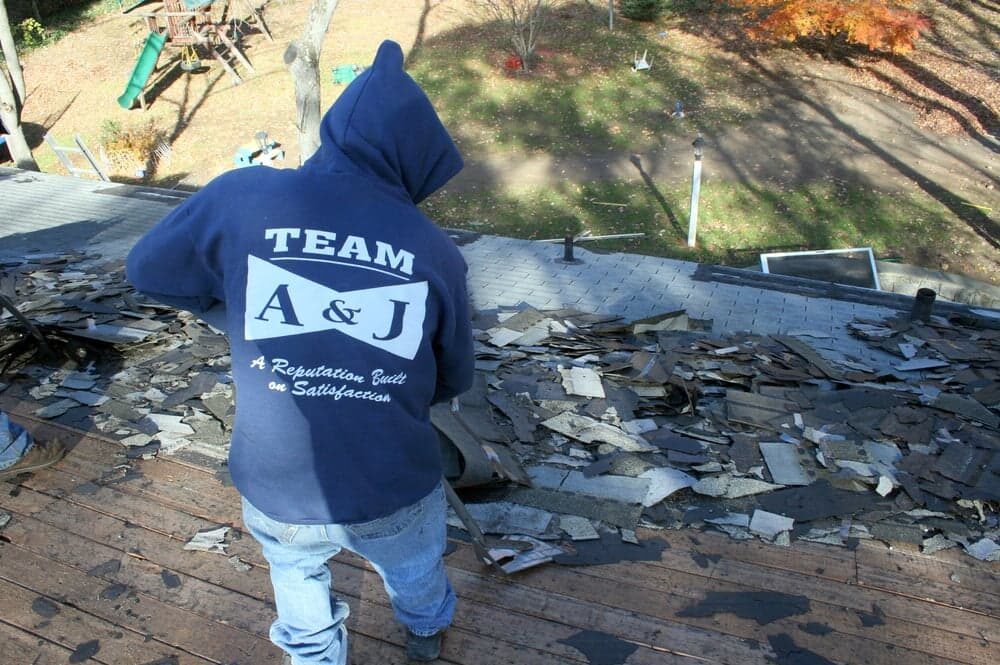
What we will never do is recommend the most expensive option just because we can. Our name is on every roof we install, and in a county where word travels fast between neighbors, that matters more to us than any single sale.
Homeowner's Checklist: Before You Commit to a New Roof
Print this out or save it. These are the questions and steps we think every Bergen County homeowner should go through before signing anything.
- Get a written, itemized estimate, not a verbal number over the phone
- Confirm whether your project requires a construction permit. Most detached one- and two-family homes in New Jersey do not, but attached homes, multi-family properties, and any job involving decking or rafters are different
- Ask what happens if structural damage is found once the old roof comes off, and get that pricing in writing up front
- Compare material options against how long you plan to stay in the home, not just the sticker pricectural damage is found once the old roof comes off, and get that pricing in writing up front
- Ask about attic insulation and ventilation, since poor airflow shortens the life of any roof
- Confirm the contractor is registered with the New Jersey Division of Consumer Affairs. Every home improvement business must display a 13-digit number beginning with 13VH on contracts, estimates, and advertising. Verify it, and confirm the contractor carries general liability and workers' compensation insurance
- Confirm manufacturer certification (GAF, Owens Corning, or equivalent)
- Ask for local references or reviews from other Bergen County homeowners
- Schedule your project around the season, ideally spring or fall, weather permitting
- Get the manufacturer's warranty terms in writing, not just a verbal assurance
- Ask what a free inspection would find on your roof today, before you spend a dollar
Frequently Asked Questions
How much does a new roof cost in Bergen County, NJ?
Most complete asphalt shingle roof replacements in Bergen County run between $9,000 and $18,000, depending on the size, pitch, and complexity of the home. Premium materials like slate or copper cost significantly more.
Do I need a permit to replace my roof in New Jersey?
For most detached single-family and two-family homes, no. New Jersey classifies replacement of existing roof covering on detached one- and two-family dwellings as ordinary maintenance. The exemption does not extend to attached or multi-family properties, and it does not cover structural work such as replacing sheathing or rafters, which does require a permit. A quick call to your municipal construction office will confirm which applies to your home.
How long will a new roof last in Bergen County's climate?
Properly installed asphalt shingles typically last 20 to 30 years here. Metal roofing can last 40 to 70 years, and slate can last well over a century. Our freeze-thaw cycles and humidity mean installation quality and ventilation matter just as much as the material itself.
What time of year is best to replace a roof in Bergen County?
Spring and fall tend to offer the most favorable weather and scheduling. That said, an urgent repair or replacement should never wait for the right season. We work through Bergen County winters when a roof cannot afford to wait.
Is the cheapest estimate always the best deal?
Not necessarily. A very low bid can sometimes mean corners are being cut on materials, underlayment, or labor. We always encourage homeowners to compare what is actually included, not just the bottom line number.
Get a Free, Honest Estimate
A new roof is one of the biggest investments you will make in your home, and you deserve to go into that decision with real numbers, not guesswork. A & J Reliable offers free estimates for every Bergen County homeowner, with no pressure and no hidden fees. We would be glad to walk your roof with you and tell you honestly what it needs, whether that is a full residential roofing replacement, a repair, or simply a little more time.




